My Go-To Summer Reading List for K-12 Students
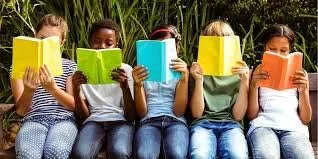
Every summer, I notice a similar pattern. A child who was reading steadily in May comes back to school in September and needs several weeks to feel comfortable engaging in the content. Teachers call it the summer slide, and researchers have been studying it for decades. And what they consistently find is that students can lose up to two months of reading progress over the summer if they are not reading regularly.
Two months. That is significant. And it is entirely preventable.
But here is what I want parents to understand: the solution is not a reading program, a workbook, or a set of comprehension questions. The solution is a great book. A book a child chooses, cares about, and cannot wait to return to. A book that makes them forget they are supposed to be learning anything at all.
Reading for pleasure is not a lesser form of reading. It is the engine that drives everything else. Vocabulary, fluency, comprehension, background knowledge— all of it continues to grow if a child is reading something they love. The research is clear and overwhelming: children who read for pleasure over the summer return to school ahead, not behind.
So the most important thing you can do this summer is find your child a book they cannot put down. The list below is a starting point. These are books I have read with my own children, recommended to hundreds of students over the years, and watched them work their quiet magic on even the most resistant readers.
A Note on How to Use This List
Do not assign books. Do not set a reading schedule with consequences. Do not quiz your child on what they read. None of those things build a reading life. They build reading anxiety.
Instead, let your child choose. Browse the list together. Read the descriptions out loud. Let them pick the one that sounds most interesting to them -- even if it is not the one you would choose. A child who picks their own book is a child who will actually read it.
If your child is reluctant, read alongside them. Pick up the same book and read it yourself. Talk about it at dinner. Ask questions out of genuine curiosity, not assessment. When a child sees a parent genuinely interested in a story, something shifts. Books stop being homework and start being something people do together.
And if your child wants to read the same book three times, let them. Rereading is not a sign of low ability. It is a sign of deep engagement. Fluency grows every time a child reads a familiar text. Let them love what they love.
Grades K-2: Making Reading Feel Like Magic
The single most important thing for this age group is that reading feels good. Warm, funny, surprising, and connected to someone your child loves. Read aloud together as much as possible. Your voice is a gift. When you read to a child, you are giving them vocabulary they could not yet access on their own, modeling what fluent reading sounds like, and building an association between books and closeness that will last their entire lives.
The Frog and Toad series by Arnold Lobel has been making children laugh and feel understood for fifty years. Frog and Toad are best friends who worry, celebrate small victories, and treat each other with enormous kindness. Children see themselves in these stories without knowing they are doing it.
Mo Willems' Pigeon series and Elephant and Piggy books are pure joy. The humor is sophisticated enough to make adults laugh out loud, but accessible enough for a child who is just learning to read independently. These books make children feel like they are in on the joke.
For children who are ready for chapter books, the Magic Treehouse series by Mary Pope Osborne is one of the most reliable gateway series I have ever encountered. Jack and Annie are curious, brave, and deeply likable. History, adventure, and just enough mystery to keep even a hesitant reader turning pages.
Julia Donaldson's picture books, Room on the Broom and The Gruffalo in particular, are perfect for reading aloud. The rhyme and rhythm make them impossible to resist, and children will ask to hear them again and again. That repetition is building phonemic awareness and fluency without either of you noticing.
Grades 3-5: The Years That Shape Everything
Grades three through five are the years when children have just enough skill to be completely swept away by a great story. They can read independently, but they are still young enough to be fully absorbed in a fictional world. These are the years when reading habits are formed, sometimes for life.
I had a student a few years ago, a fourth grader named -- well, let's call her Maya. Maya came to me convinced she was a bad reader. She read slowly, she avoided books, and she had a particular talent for looking busy without actually reading anything. Within our first session I realized that Maya was not a bad reader. Maya had simply never found a book she loved. Within two weeks of starting Keeper of the Lost Cities, she was staying up past her bedtime and texting her mom updates about the plot. She read the entire series that summer. She has not stopped reading since.
For that reason, my top recommendation for grades three through five is simple: try everything on this list until you see your child deeply engaged. Wonder by R.J. Palacio builds empathy. Holes by Louis Sachar is a masterclass in plot construction that keeps children guessing until the final page. Charlotte's Web by E.B. White is one of the most beautifully written books in the English language, and it never fails to generate a conversation about friendship, loyalty, and loss.
For the child who is not yet a confident reader, graphic novels are not a lesser choice. They are a brilliant one. New Kid by Jerry Craft won the Newbery Medal. Raina Telgemeier's books have converted many reluctant readers. A child who is reading a graphic novel is still reading.
Grades 6-8: The Middle School Reader
Middle school is where reading habits either deepen or disappear. The demands of school increase, social life becomes more complex, and screens compete more aggressively for attention. A child who does not have a strong reading identity by sixth grade is at real risk of becoming a non-reader by high school.
The good news is that middle grade and young adult literature has never been better. There are books being written for this age group right now that are as compelling, as beautifully crafted, and as important as anything in the adult literary canon.
Percy Jackson and the Olympians by Rick Riordan is the gateway series for this age group. I have watched it work on children who swore they hated reading. It is funny, fast-paced, and full of characters who feel real. The mythology is a bonus that students carry into their history and English classes without realizing it.
The Crossover by Kwame Alexander is a novel written entirely in verse about twin brothers navigating basketball, family, and first love. It won the Newbery Medal and it deserved every word of the recognition. I have used it with students who thought poetry was boring and watched them read it in a single sitting.
For students who want a modern classic, Roll of Thunder Hear My Cry by Mildred Taylor is essential. It is one of the most important American novels written for young readers and it generates the kind of conversations that stay with a child for years. Fish in a Tree by Lynda Mullaly Hunt is equally important for any child who has ever struggled in school and felt invisible because of it.
For the student who wants adventure and cannot be slowed down, the Percy Jackson universe extends into Heroes of Olympus and beyond. Keeper of the Lost Cities by Shannon Messenger is another series that students devour. And for the graphic novel reader, New Kid by Jerry Craft is a Newbery winner that tackles race, class, and belonging with honesty and humor.
Grades 9-12: Reading That Changes You
By high school, a student's relationship with reading is personal. They know what they like, what bores them, and what makes them stay up too late. The right book at the right moment can change the way a teenager sees themselves and the world. I have seen it happen.
I want to be honest about something: a lot of what gets assigned in high school English classes is not what I would recommend for summer reading. The classics assigned in school are often brilliant but they are also difficult, dense, and not designed for a teenager reading voluntarily on a summer afternoon. Summer reading should feel like a gift, not an extension of the school year.
The books I recommend for high schoolers are the ones that feel relevant to their lives right now. Not classics assigned because they build character. Books about identity, belonging, injustice, love, and figuring out who you are. The Hate U Give by Angie Thomas is one of the most important novels published in the last decade. It is also one of the most readable. Every high schooler I have recommended it to has finished it. The Poet X by Elizabeth Acevedo is a novel in verse about a Dominican-American girl finding her voice through slam poetry. It reads like music and it lands in a way that stays with you.
For students who love fantasy and want something epic, Six of Crows by Leigh Bardugo is as good as the genre gets. The characters are complex, the plot is intricate, and the world is so fully realized that it is hard to put down. Children of Blood and Bone by Tomi Adeyemi brings West African mythology to life in a way that is thrilling and stays with you long after the last page.
For the student who wants something that connects to the real world, The Hunger Games by Suzanne Collins remains one of the most brilliantly constructed dystopian novels ever written for young adults. Monster by Walter Dean Myers is a sharp, honest look at race and justice told through the screenplay a sixteen-year-old writes during his own murder trial. Both books give high schoolers something real to think and talk about.
And for the student who thinks they do not like reading: Aristotle and Dante Discover the Secrets of the Universe by Benjamin Alire Saenz. I have put this book in the hands of more high school students who said they did not like reading than any other title on this list. It is quiet, slow, and exactly what a teenager who thinks they hate reading does not expect. Every single one of them finished it.
One Last Thing
I always know when my children are deep in a good book because the stories start appearing at the dinner table. They tell me about characters as if they are real people. They argue about what a character should have done differently. They ask questions I do not have the answers to.
That is what reading does. It opens the world up. It fills children with questions, opinions, and language. It gives them an inner life that is entirely their own.
May these books do that for your family this summer. And if you need help finding the right book for your specific child, feel free to reach out. Matching a child to the right book is one of my favorite things in the world to do.
-- -- --
Rachna Deepa Dharna is a reading specialist, writing tutor, and founder of Revive Tutoring. She works one-on-one with K-12 students on reading, writing, and everything in between. Her approach is warm, structured, and built around each child's specific needs, because strong readers become strong writers, and strong writers become confident thinkers. Learn more at revivetutoring.com.